Running in 2020
I ran a lot in 2020. The increased free time caused by lockdowns (and the closure for several weeks of my local park in London forcing me to seek running routes further afield) changed my relationship to running. I went from doing a few 5km runs a week after work, and maybe a longer run on the weekend if I felt like it, to running 10k or more at a time, and running many more days.
[Read More]
 How much money can you save cycling instead of using public transport? This blog shows what I spent and what I saved while using cycling as my primary form of transport for 1,516 days, or just shy of 4 years and 2 months. This covers from when I first bought a bike on 30 June 2016 to 23 August 2020, the day before I packed my bike away as part of my move to Berlin.
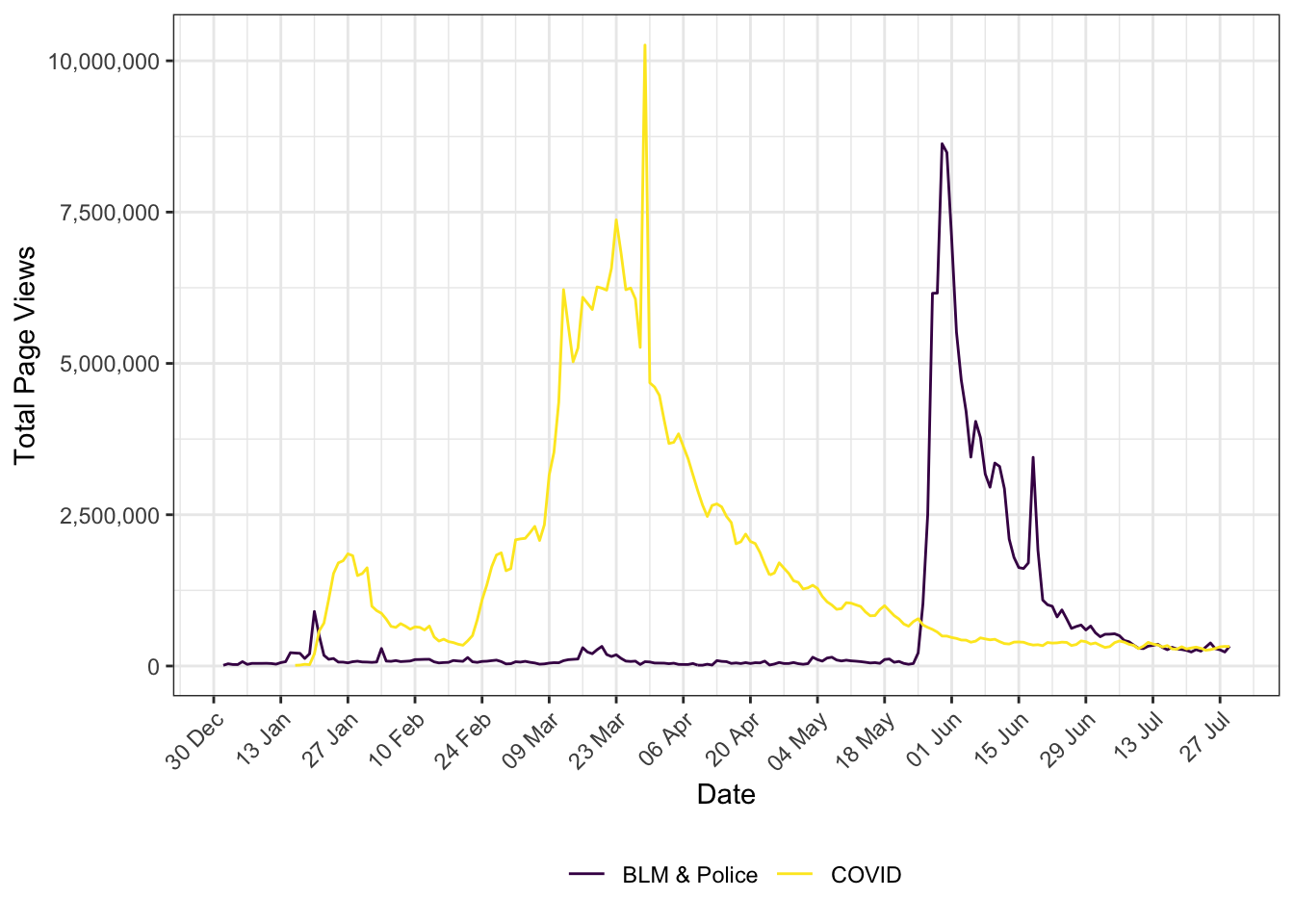 Wikipedia is a potentially useful indicator of the topics people online are interested in. Nothing seems to drive traffic to an individual’s Wikipedia entry like their death, and the top articles list is always
I used the pageviews package to download statistics on the 1000 most viewed Wikipedia pages for the first seven months of 2020 (up until July 30th).
I’ve grouped Wikipedia pages into 4 categories, based on their subject:
Wikipedia is a potentially useful indicator of the topics people online are interested in. Nothing seems to drive traffic to an individual’s Wikipedia entry like their death, and the top articles list is always
I used the pageviews package to download statistics on the 1000 most viewed Wikipedia pages for the first seven months of 2020 (up until July 30th).
I’ve grouped Wikipedia pages into 4 categories, based on their subject:
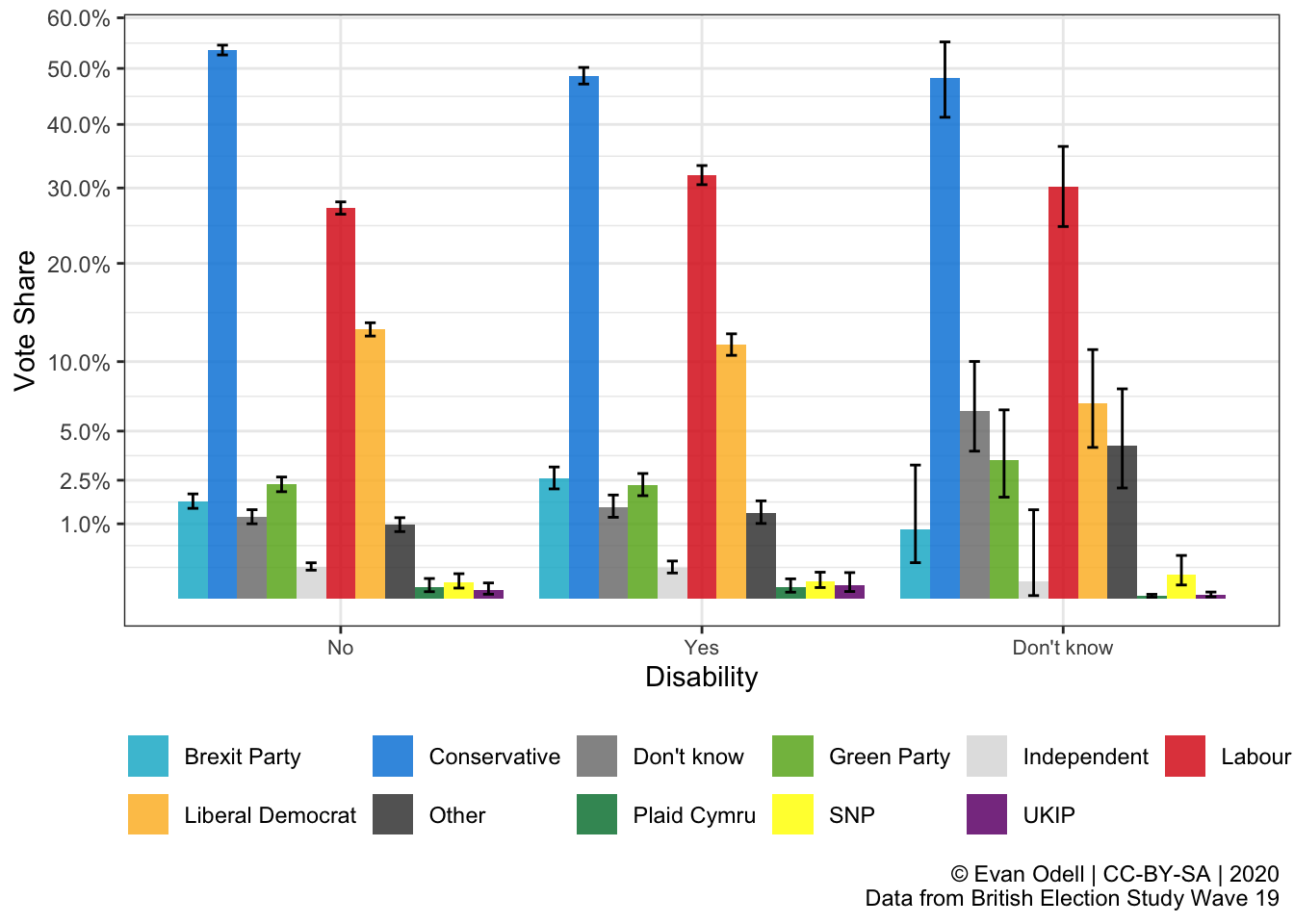 In line with a previous post summarising disabled people’s votes in the 2016 EU Referendum and the 2017 General Election, I have created, using the just released British Election Study wave 19 data.
I’m hoping to dig into this dataset more in the coming weeks (along with everyone else interested in UK politics), and produce some more consistent comparisons with previous elections but in the meantime, here’s my quick and dirty, written from a Parisian cafe analysis of how disabled people voted in the 2019 general election.
In line with a previous post summarising disabled people’s votes in the 2016 EU Referendum and the 2017 General Election, I have created, using the just released British Election Study wave 19 data.
I’m hoping to dig into this dataset more in the coming weeks (along with everyone else interested in UK politics), and produce some more consistent comparisons with previous elections but in the meantime, here’s my quick and dirty, written from a Parisian cafe analysis of how disabled people voted in the 2019 general election.
 Why is the Wellcome Collection presenting exhibits with uncritical pseudoscientific claims?
The Wellcome Collection is the free museum and library operated by the Wellcome Trust, a hugely important medical and scientific research funder and one of the wealthiest charitable foundations in the world. The mission of the Wellcome Collection “is to be a place that challenges the ways people think and feel about health by connecting science, medicine, life and art”, according a document produced for its 10th anniversary.
Why is the Wellcome Collection presenting exhibits with uncritical pseudoscientific claims?
The Wellcome Collection is the free museum and library operated by the Wellcome Trust, a hugely important medical and scientific research funder and one of the wealthiest charitable foundations in the world. The mission of the Wellcome Collection “is to be a place that challenges the ways people think and feel about health by connecting science, medicine, life and art”, according a document produced for its 10th anniversary.
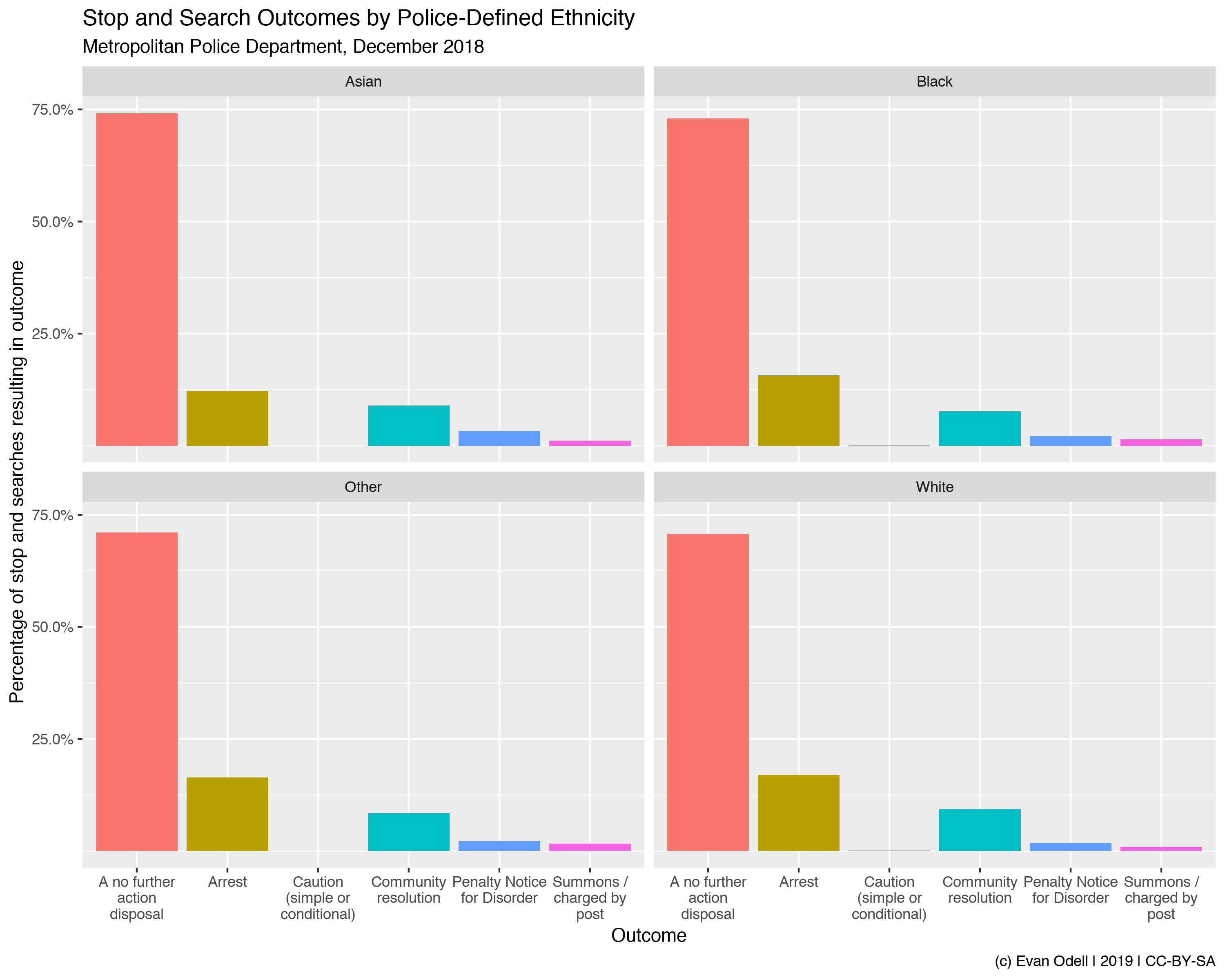 The ukpolice R package downloads data from the UK Police public data API, the full docs of which are available at https://data.police.uk/docs/. It is now available on CRAN, so can be installed with install.packages("ukpolice").
The API uses a ‘leaky bucket’ rate limiter, which allows for 15 requests per second with a burst of 30. This allows for 15 requests each second, but up to 30 in a single second at one go.
The ukpolice R package downloads data from the UK Police public data API, the full docs of which are available at https://data.police.uk/docs/. It is now available on CRAN, so can be installed with install.packages("ukpolice").
The API uses a ‘leaky bucket’ rate limiter, which allows for 15 requests per second with a burst of 30. This allows for 15 requests each second, but up to 30 in a single second at one go.
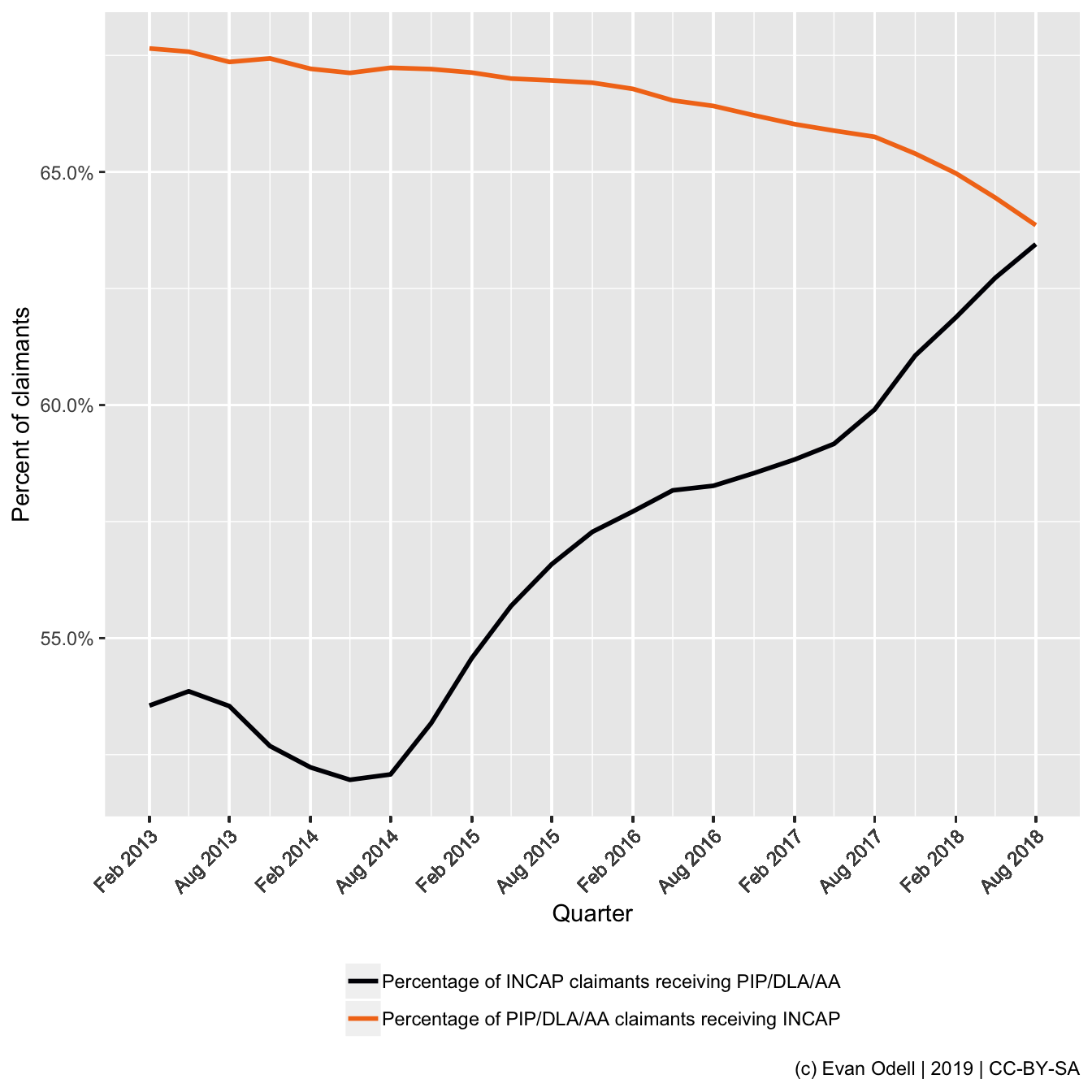 Earlier this week the DWP secretary Amber Rudd announced a series of changes to the disability benefits system, including scrapping re-assessment for pensioners and possibly combining the assessment for the two main working-age disability benefits: Employment and Support Allowance (ESA), a means-tested benefit providing financial support to unemployed disabled people, and Personal Independence Payment (PIP), a needs-tested benefit to help with the additional cost of living associated with disability.
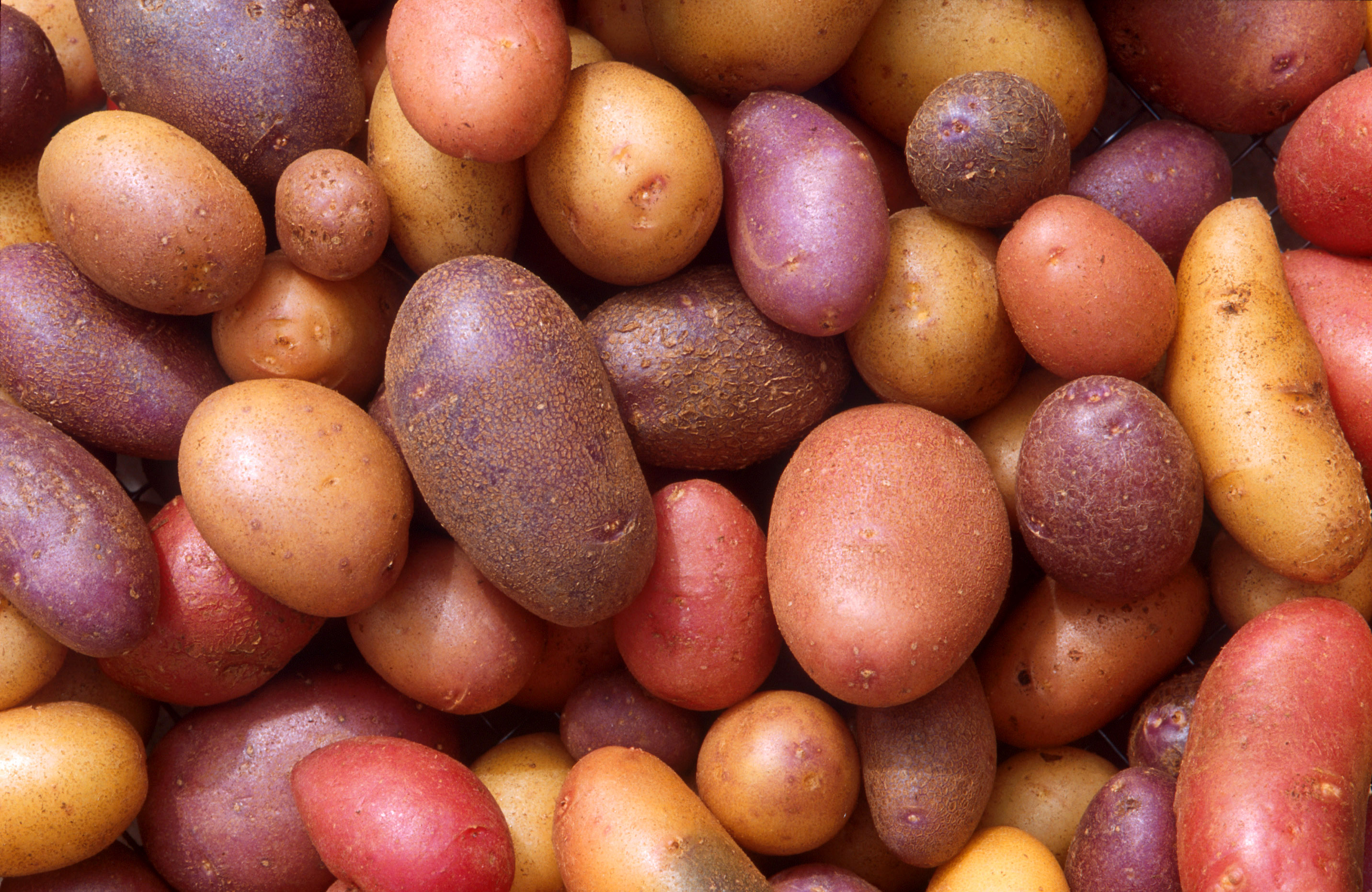 Potatoes are an undeniably important vegetable, far more important to human history than say, brocolli. The History and Social Influence of the Potato is 768 pages long, and “an extraordinary book, like no other, a vast compendium of curious fact and passionately recounted social history that calls to mind an unexpected but completely satisfying fusion of The Anatomy of Melancholy and Fernand Braudel’s Capitalism and Material Life”, according to Angela Carter.